Get Free Ebook Your Inner Fish: The Amazing Discovery of Our 375-Million-Year-Old Ancestor, by Neil Shubin
Never ever mind if you don't have adequate time to visit the e-book establishment as well as hunt for the preferred publication to review. Nowadays, the online publication Your Inner Fish: The Amazing Discovery Of Our 375-Million-Year-Old Ancestor, By Neil Shubin is concerning provide convenience of checking out behavior. You could not need to go outside to search guide Your Inner Fish: The Amazing Discovery Of Our 375-Million-Year-Old Ancestor, By Neil Shubin Searching as well as downloading guide entitle Your Inner Fish: The Amazing Discovery Of Our 375-Million-Year-Old Ancestor, By Neil Shubin in this article will certainly offer you far better solution. Yeah, on the internet e-book Your Inner Fish: The Amazing Discovery Of Our 375-Million-Year-Old Ancestor, By Neil Shubin is a type of electronic e-book that you can enter the web link download provided.
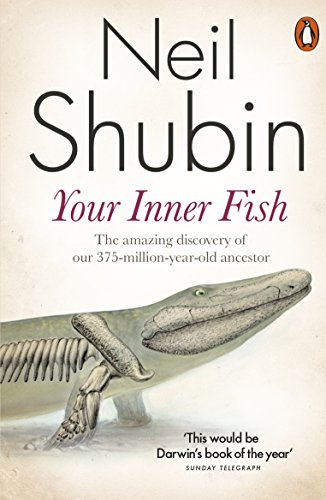
Your Inner Fish: The Amazing Discovery of Our 375-Million-Year-Old Ancestor, by Neil Shubin

Get Free Ebook Your Inner Fish: The Amazing Discovery of Our 375-Million-Year-Old Ancestor, by Neil Shubin
Just how a concept can be obtained? By looking at the stars? By checking out the sea and also looking at the sea interweaves? Or by reviewing a publication Your Inner Fish: The Amazing Discovery Of Our 375-Million-Year-Old Ancestor, By Neil Shubin Everyone will certainly have particular unique to obtain the inspiration. For you who are passing away of publications as well as consistently get the motivations from books, it is truly terrific to be right here. We will reveal you hundreds compilations of guide Your Inner Fish: The Amazing Discovery Of Our 375-Million-Year-Old Ancestor, By Neil Shubin to check out. If you such as this Your Inner Fish: The Amazing Discovery Of Our 375-Million-Year-Old Ancestor, By Neil Shubin, you can additionally take it as your own.
If you really want truly get guide Your Inner Fish: The Amazing Discovery Of Our 375-Million-Year-Old Ancestor, By Neil Shubin to refer currently, you should follow this web page consistently. Why? Remember that you require the Your Inner Fish: The Amazing Discovery Of Our 375-Million-Year-Old Ancestor, By Neil Shubin resource that will offer you ideal expectation, don't you? By seeing this site, you have started to make new deal to always be current. It is the first thing you could start to obtain all profit from being in a web site with this Your Inner Fish: The Amazing Discovery Of Our 375-Million-Year-Old Ancestor, By Neil Shubin as well as various other collections.
From currently, locating the finished site that sells the completed books will certainly be many, yet we are the relied on site to see. Your Inner Fish: The Amazing Discovery Of Our 375-Million-Year-Old Ancestor, By Neil Shubin with very easy web link, very easy download, and completed book collections become our excellent solutions to get. You can find and utilize the perks of picking this Your Inner Fish: The Amazing Discovery Of Our 375-Million-Year-Old Ancestor, By Neil Shubin as every little thing you do. Life is consistently establishing as well as you require some brand-new publication Your Inner Fish: The Amazing Discovery Of Our 375-Million-Year-Old Ancestor, By Neil Shubin to be reference always.
If you still need more publications Your Inner Fish: The Amazing Discovery Of Our 375-Million-Year-Old Ancestor, By Neil Shubin as referrals, visiting look the title as well as motif in this site is offered. You will certainly discover even more great deals books Your Inner Fish: The Amazing Discovery Of Our 375-Million-Year-Old Ancestor, By Neil Shubin in different self-controls. You can likewise as quickly as feasible to review the book that is already downloaded. Open it and save Your Inner Fish: The Amazing Discovery Of Our 375-Million-Year-Old Ancestor, By Neil Shubin in your disk or gadget. It will certainly relieve you anywhere you require guide soft file to check out. This Your Inner Fish: The Amazing Discovery Of Our 375-Million-Year-Old Ancestor, By Neil Shubin soft data to check out can be reference for every person to enhance the skill and ability.
Neil Shubin's Your Inner Fish is the unexpected story of how one creature's journey out of the water made the human body what it is today - and one man's voyage of discovery in search of our origins. Have you ever wondered why our bodies look and work and fail the way they do? One of the world's leading experts in evolutionary history, Neil Shubin reveals the secrets of our biology: why if we want to understand our limbs we should take a close look at Tiktaalik, the first fish capable of doing a push-up; why if we want to know why we hiccup, the answer is in the way fish breathe; and why it is that fish teeth are surprisingly similar to human breasts. 'This would be Darwin's book of the year' Sunday Telegraph 'An intelligent, exhilarating, and compelling scientific adventure story' Oliver Sacks, author of The Man Who Mistook His Wife for a Hat 'Delightful ...his enthusiasm is infectious' Steven D. Levitt, author of Freakonomics 'Profoundly fascinating ...a magisterial work ...expressed so clearly and with such good humour' Financial Times 'Will make you think about your organs in ways you have never considered before' Sunday Times Neil Shubin is a palaeontologist in the great tradition of his mentors, Ernst Mayr and Stephen Jay Gould. He has discovered fossils around the world that have changed the way we think about many of the key transitions in evolution and has pioneered a new synthesis of expeditionary palaeontology, developmental genetics and genomics. He trained at Columbia, Harvard and Berkeley and is currently Chairman of the Department of Anatomy at the University of Chicago.
- Sales Rank: #3687348 in Books
- Published on: 2009-01-01
- Format: International Edition
- Original language: English
- Number of items: 1
- Dimensions: 7.91" h x .63" w x 5.24" l, .44 pounds
- Binding: Paperback
- 256 pages
Most helpful customer reviews
1 of 1 people found the following review helpful.
"Nothing in Biology Makes Sense Except in the Light of Evolution"
By Mike Morg
I'll first give my take on the book then provide a brief summary. Author Neil Shubin is an awesome man and author. His personal anecdotes came at perfect times and flowed with the book in harmony. His writing style is congenial, conversational, humorous, candid, and i'd go as far to say inspirational. Prospective readers - especially those who aren't enthralled by evolution or anatomy - might predetermine the text as being bland and heavy. It's quite the opposite; I found myself laughing many times and perhaps the only weakness of the book is that it's too short. I personally enjoy shorter books because I enjoy delving into a few different topics a month. For only 200 pages there is a hell of a lot to learn and so much great information jam-packed in an easy-to-understand way. The author is an acute articulator, and has a good habit of recapitulating unfamiliar topics. This is an unconventional evolution book. Scientist Theodosius Dobzhansky once famously said "Nothing in Biology Makes Sense Except in the Light of Evolution". This could have been the name of this book. Having read numerous evolution books before, I would have thought that attaining higher appreciation for it than I already have was an unattainable goal, but reading this book shattered that notion because my appreciation for evolution is substantially heightened. Nothing is more enlightening than finding out the truth of your existence up to your very faults.
The book is split by 11 chapters. The first four explore the theme of how we can trace the same organ in different creatures. I'll briefly summarize:
- Chapter 1-4:
The author starts by describing his legendary trip to Ellesmere Island in Nunavut, Canada. He describes the struggles and the significance of his finding: The Tiktaalik; a creature from the late Devonian period (375 million years ago) that currently holds as the most well-established evolutionary transition from fish to amphibian. I've read about the Tiktaalik before in one of Dawkin's books, but I was surprised to find out that the author of this book actually discovered it. His expedition is a fascinating read in itself because the author is a great storyteller, and seems to be a really humble, laid-back, and fun guy. He all of the latter not only when sharing his personal experiences, but when speaking on behalf of his chosen subjects as well. He describes how he ended up near the arctic - and on the Pennsylvania highways - when looking for his fossils of choice. He gives a general introduction of where and how - using paleontology and evolution - you would find fossils. He elucidates the difference between fish and amphibian (through bone structure and limbs) and mammal and reptile. There's a chapter dedicated to teeth. Teeth are important and extremely helpful when identifying or distinguishing differences among animals (i.e. reptiles and mammals). There's a chapter dedicated limb structure, specifically the hand and arm. The developmental difference between our arms and a fish's fins are very similar early on in development but become vastly different through the process (inside the egg). The author explains why and shows experiments involving the relevant genes for such functions (those involving the ZPA tissue and Sonic Hedgehog gene manipulation, there's a chapter to this called "Handy Genes").
- Chapter 5-11:
In each one of these chapters, certain body parts of ours are to our distant ancestors. In other words, we get to explore, interpret, analyze, compare and contrast the our body functions with our distant ancestors. We figure out the inception of many body parts (and functions) and why they evolved to work the way they do for us. Specifically, there's a chapter on: the head, entire body, scent, vision, and ears.
Some interesting stuff by chapter: In the field of Embryology, - the study of Embryos, or fetuses - we see that all animals are alike at their very initial gestation stage, with four little swellings called arches that develop around what comes to be the throat area. This is explained in more detail in the book but the fascinating thing is that these arches, depending on the species, all come to have a different but similar function in the body as the conception process gets underway. In the book, the example of comparison are humans and our very distant ancestor shark. Cranial nerve structure is also discussed and compared. Also discussed are headless animals - primitive ones - and the origins of our notochord. There's a whole section on the similarity of active (and inactive) genes among completely different specifies. What happens if you remove tissue, or add certain DNA strands in fruitful area? The evolution of scent is interesting because fish evolving to leave the water and thus become an amphibian, it requires major changes because there are 2 kinds of smelling genes: one for water and one for air. The chapter on scent is epic and so is the proceeding one on vision and then Hearing. We can trace major events in our eyes by analyzing certain eye genes that we share with other creatures. Mammals have the same ear bones as fish, the difference being that wish don't have ears. We come to see that there's major contrast between the functions of these bones for different groups of animals, like mammals and amphibians. These differences are part of why we label an animal to be a "mammal" or "amphibian" in the first place. Our middle ear bones are the malleus, incus and stapes. We come to see that the malleus and incus evolved from jawbones.
Of the million years of life, Homo Sapiens have survived extinction and for the time being remain extant. But this doesn't mean that we don't have our problems. There's no preternatural creator ghost behind the complexity or susceptibility of our bodies, but even better: an evolutionary explanation of everything in our body from our genetic workings to our genotypes. Because of such primitive origins, our bodies aren't fully accustomed to certain things and thus thanks to our fish ancestors we develop things like hernias or hangovers. So why is this better then? For one, because it makes perfect sense! And two, by having a natural understanding of our anatomy, we can spearhead our way into the understanding of imperative issues - like disease or congenital defects - that shackle and sometimes terminate the life of many good individuals. This is very important, and so is this book. I'm grateful I read it.
4.8/5
1 of 1 people found the following review helpful.
She seemed to really enjoy this book and retained a lot of information on ...
By D Neal
I haven't read this book. I bought it as a gift for my mother at Christmas. My mom has always believed in evolution, but some questions she asked me made me think she didn't quite understand how some of the mechanics worked. What I did was look for a couple books she could read that would explain it to her and this was one of them. She seemed to really enjoy this book and retained a lot of information on it. It seems that a lot of information I learned in high school biology my mother didn't know about, but now we can discuss to some extent how similar the fetuses of different animals are at certain stages of development. Since reading this book she has taken a more active interest in evolutionary science. We have watched many documentaries and listened to some college lectures on evolution. I am glad this book got my mother to be more interested in science and looking at the world a little more rationally.
1 of 1 people found the following review helpful.
Charting the progression of life leading to the human body
By Bernie Gourley
University of Chicago paleontologist / anatomist, Neil Shubin, charts the progression of life that ultimately leads to the human body. Professor Shubin’s discovery of one of the earliest fish (the Tiktaalik) to survive at the fringes of land makes him well placed to delve into this topic. The book does tell the paleontological detective story involved in tracking down the Tiktaalik. Shubin also uses his experiences in cadaver dissection to elucidate some of his points. However, the book goes beyond these stories to unshroud the development of the arms, hands, heads, and sense organs that lead to our own structure.
Along the way, the author does an excellent job of clearly presenting the overwhelming evidence in support of Darwinian evolution. A fine example of this can be seen in the quote, “If digging in 600 year-old rocks, we found the earliest jellyfish lying next to the skeleton of a woodchuck, then we would have to rewrite our texts.” Needless to say, no such discovery has been made, and the layers of rock remain an orderly record of the progress of life from simple to increasingly complex. Shubin spends more of his time talking about the evidence in terms of specific anatomical detail. For example, “All creatures with limbs, whether those limbs are wings, flippers, or hands, have a common design. One bone,… two bones,… a series of small blobs…”
The book is arranged in eleven chapters. The first chapter provides an overview and tells the story of the search for and discovery of the Tiktaalik. Then the book goes on to explain the development of limbs, genes, teeth, heads, anatomical plans, and the various sense organs. A final chapter looks at what our evolutionary history means for our present-day lives (particularly what systematic problems the process has left us, from hernias to heart disease.) The book covers many of the structures that define us as human, but notably excludes the ultimate defining factor: our relatively gigantic brains. That’s alright; the evolution of the brain is surely a book or more unto itself. There are line drawings throughout to help clarify the subject, many of these show analogous structures between various creatures.
I found this book to be readable and informative. It’s both concise and clear. It’s approachable to readers without scientific backgrounds. I’d recommend it for anyone interested in learning how the human body got to its present shape.
Your Inner Fish: The Amazing Discovery of Our 375-Million-Year-Old Ancestor, by Neil Shubin PDF
Your Inner Fish: The Amazing Discovery of Our 375-Million-Year-Old Ancestor, by Neil Shubin EPub
Your Inner Fish: The Amazing Discovery of Our 375-Million-Year-Old Ancestor, by Neil Shubin Doc
Your Inner Fish: The Amazing Discovery of Our 375-Million-Year-Old Ancestor, by Neil Shubin iBooks
Your Inner Fish: The Amazing Discovery of Our 375-Million-Year-Old Ancestor, by Neil Shubin rtf
Your Inner Fish: The Amazing Discovery of Our 375-Million-Year-Old Ancestor, by Neil Shubin Mobipocket
Your Inner Fish: The Amazing Discovery of Our 375-Million-Year-Old Ancestor, by Neil Shubin Kindle

Tidak ada komentar:
Posting Komentar